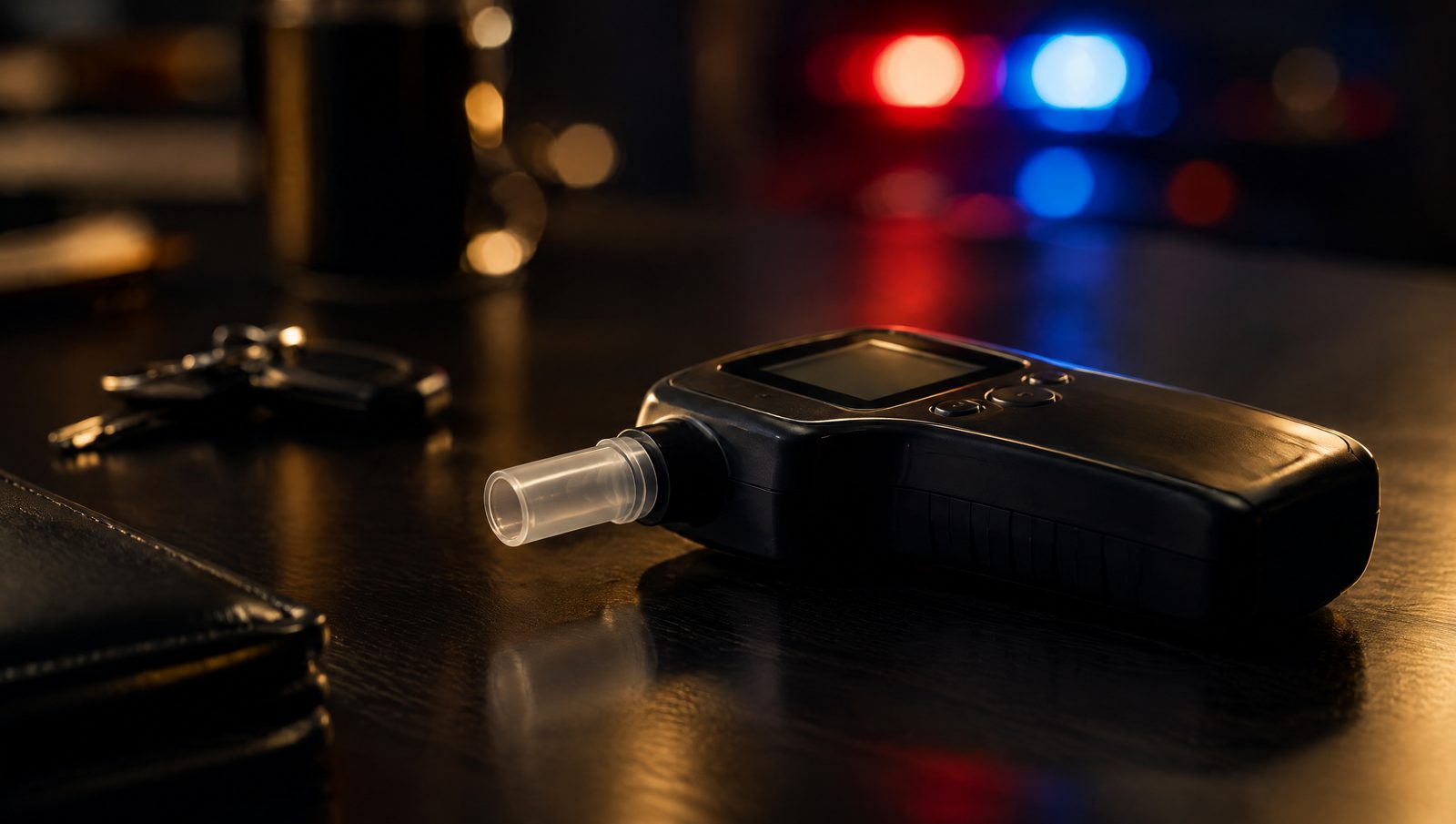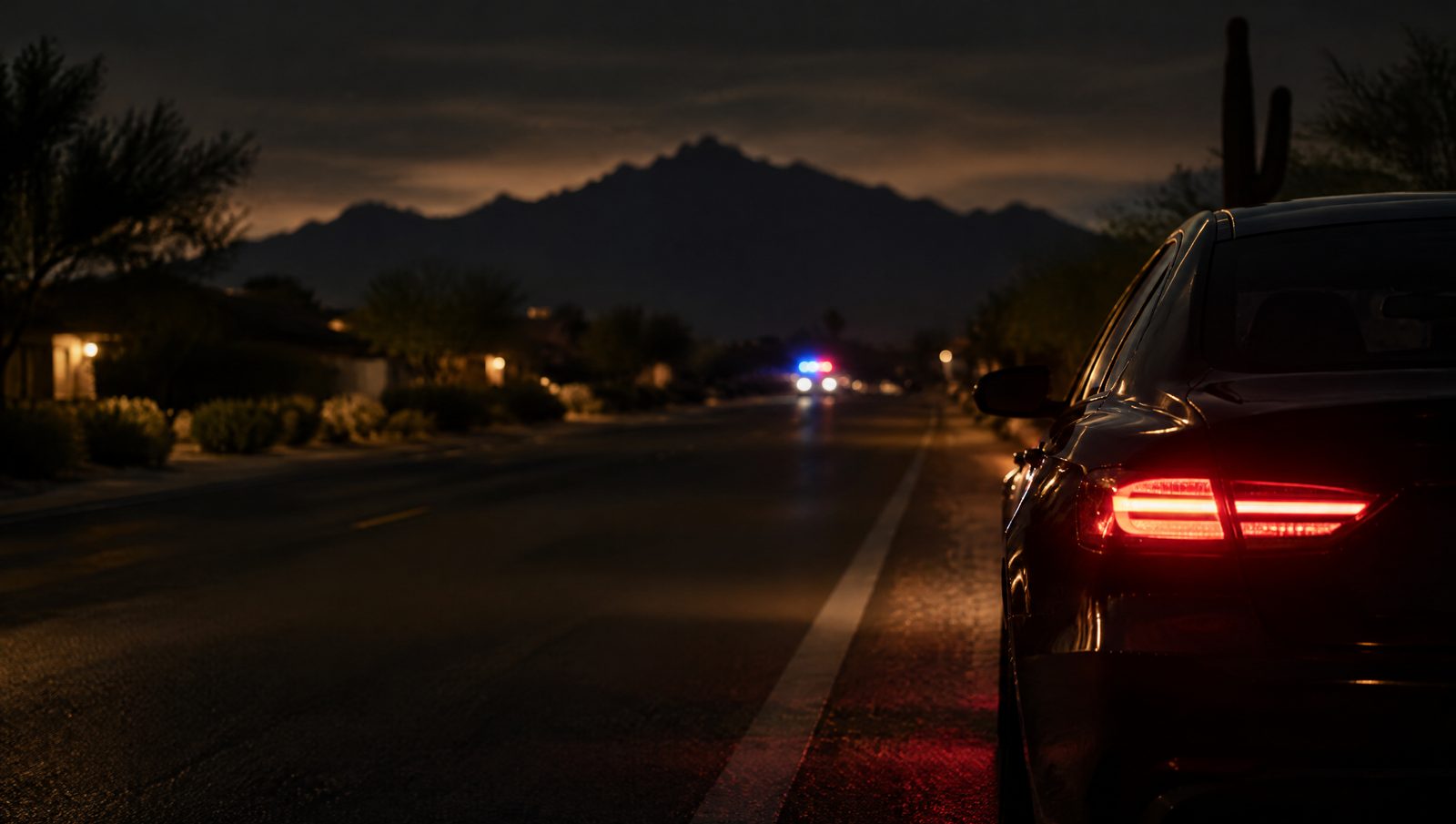
Thanksgiving week is one of the busiest travel times of the year in the Valley, and it is also when holiday DUI enforcement usually ramps up. If you are driving to dinner, heading home from a Wednesday-night get-together, or picking up family from the airport, you may encounter extra patrols or even a Phoenix DUI checkpoint. Knowing what to expect can help you stay calm and protect yourself.
The short version: DUI checkpoints are generally legal in Arizona when they are run under proper guidelines, but many Valley agencies rely more heavily on "saturation patrols," where extra officers look for impaired driving across a wider area. Either way, you must provide your license, registration, and proof of insurance, and you must not refuse a legally requested chemical test without expecting serious license consequences under Arizona's implied consent law. At the same time, you keep important rights, including the right to stay quiet about where you have been and what you have had to drink.
Below, we walk through how holiday enforcement works, what implied consent really means, and practical steps to take if you are stopped or arrested.
Why DUI Enforcement Increases Over Thanksgiving
In Arizona, the holiday season traditionally brings coordinated DUI enforcement. Law enforcement agencies across Maricopa County and the rest of the state commonly join together in a holiday DUI task force effort that often begins around Thanksgiving and runs through the New Year. Exact dates, participating agencies, and tactics change from year to year.
During this period you may see:
- More patrol cars on major roads such as I-10, I-17, the Loop 101 and 202, and busy surface streets near restaurants and entertainment districts.
- Saturation patrols, where officers concentrate in a specific area and stop drivers for traffic violations, then look for signs of impairment.
- DUI processing vans or mobile units, which allow officers to conduct testing close to where a stop happens.
- Occasional sobriety checkpoints, where vehicles are stopped in a set pattern at a fixed location.
The night before Thanksgiving is often called one of the heaviest drinking nights of the year, so expect enforcement to be noticeable that evening and through the long weekend.
How a Phoenix DUI Checkpoint Works
A sobriety checkpoint is different from an ordinary traffic stop. At a regular stop, an officer needs reasonable suspicion that you broke a traffic law or committed a crime. At a checkpoint, officers stop vehicles without individual suspicion, which is why courts require checkpoints to follow neutral, structured procedures.
What usually happens at a checkpoint
- You are directed to stop. Vehicles are typically selected by a set formula (for example, every car or every third car) rather than at an officer's discretion.
- A brief initial contact. An officer will usually ask for your license, registration, and insurance and may ask a few questions while observing you.
- Release or further investigation. If the officer sees no signs of impairment, you are generally sent on your way quickly. If the officer believes they see signs such as the odor of alcohol, slurred speech, or bloodshot eyes, you may be directed to a secondary area for more investigation.
Can you avoid a checkpoint?
Generally, legally turning around or taking a different route before reaching a checkpoint is not a crime by itself. However, if you commit a traffic violation while doing so, such as an illegal U-turn or failing to signal, an officer can stop you for that violation. The safest approach is to drive normally and lawfully.
Your Rights During a Traffic Stop in Arizona
Whether you are stopped at a checkpoint or pulled over by a patrol unit, you have rights. Using them respectfully is not an admission of anything.
What you must do
- Pull over safely and stop when signaled.
- Provide your driver's license, vehicle registration, and proof of insurance when asked.
- Follow lawful instructions, such as stepping out of the car if directed.
- Stay calm and polite. Arguing or resisting can create new problems and new charges.
What you generally do not have to do
- Answer questions about drinking or where you have been. You can politely say, "I prefer not to answer questions." Statements like "I only had two beers" are commonly used as evidence.
- Perform field sobriety tests. Roadside exercises such as walking a line, standing on one leg, or following a light with your eyes are generally voluntary in Arizona. They are hard to perform perfectly even when sober, especially when nervous, tired, or on uneven ground.
- Consent to a vehicle search. Officers may search in some circumstances without your consent, but you do not have to give permission. You can say, "I do not consent to a search," and not physically resist.
A roadside preliminary breath test, if offered, is different from the formal "evidentiary" test discussed below. The rules around each can be technical, so if you were asked to take a roadside test, mention that when you speak with a lawyer.
Arizona's Implied Consent Law, Explained
This is the part many drivers misunderstand. Under Arizona's implied consent law, A.R.S. § 28-1321, anyone who drives in Arizona is considered to have agreed in advance to chemical testing of their breath, blood, or other bodily substances if they are arrested for DUI.
In plain English: once an officer arrests you for DUI and asks you to complete a breath or blood test, refusing comes with its own consequences, separate from any DUI charge.
What happens if you refuse
- License suspension. A refusal typically leads to an administrative suspension of your driving privilege, commonly 12 months for a first refusal and longer for a repeat refusal within a certain time period. These rules can change, so confirm the details for your situation.
- A warrant for your blood. In Phoenix and around the Valley, officers often seek a search warrant for a blood draw when someone refuses, sometimes very quickly. That means a refusal may not prevent testing at all.
- Use at trial. A refusal can sometimes be raised by the prosecution as evidence in the criminal case.
Can you talk to a lawyer before testing?
Arizona generally allows a person arrested for DUI a reasonable opportunity to contact an attorney before testing, as long as it does not unreasonably delay the investigation. If you ask to speak with a lawyer, make the request clearly. Whether that right was honored can become an important issue later.
What Counts as DUI in Arizona
Arizona's DUI laws are broader than many people realize. Under A.R.S. § 28-1381, you can be charged with DUI if:
- You are impaired to the slightest degree by alcohol, drugs, or a combination;
- You have a blood or breath alcohol concentration of 0.08 or more within two hours of driving; or
- You have certain drugs or their metabolites in your system, with some exceptions such as properly used prescriptions.
Higher alcohol readings can lead to more serious charges. Extreme DUI under A.R.S. § 28-1382 applies at 0.15 or above, with tougher penalties at 0.20 or above. You can read more in our article on what a 0.15+ BAC means for an extreme DUI case, and for a broad overview of jail, fines, and ignition interlock requirements, see Understanding Arizona's DUI Penalties.
Holiday travelers should also remember that marijuana, sleep aids, and some cold or pain medications can contribute to a "slightest degree" impairment charge even when no alcohol is involved.
If You Are Arrested for DUI Over the Holiday
An arrest during a holiday weekend can feel overwhelming, especially when family is in town and courts and offices are closed. A few steps can make a real difference:
- Stay quiet and polite. Do not try to talk your way out of it at the scene or in the processing van.
- Keep every document you are given. This often includes a notice about your license suspension and information about requesting a hearing with the Motor Vehicle Division (MVD).
- Watch the deadline. You usually have only a short window to request an administrative hearing to challenge a suspension. The deadline is listed on your paperwork. Missing it can mean the suspension takes effect automatically.
- Write down what you remember. Note the time, location, what officers said, what tests you were asked to take, and whether you asked for a lawyer. Details fade quickly.
- Do not discuss the case on social media or with anyone other than your attorney.
- Talk to a DUI defense lawyer soon. Early review can preserve evidence, such as checkpoint procedures, body camera footage, and testing records.
For a step-by-step look at the process after an arrest, read First Offense DUI Arizona: What Happens After Arrest.
Common issues a defense lawyer may examine
Every case is different, but in holiday DUI cases a lawyer will often look at:
- Whether a checkpoint followed proper, neutral procedures
- Whether there was a valid reason for a traffic stop
- How field sobriety tests were administered and recorded
- Breath machine calibration and maintenance records
- Blood draw procedures, storage, and lab analysis
- Whether your request to speak with a lawyer was honored
None of these guarantee a particular result, but each can matter to how a case is resolved.
The Simplest Way to Avoid a Holiday DUI
The best protection is a plan made before the first drink. Designate a sober driver, use a rideshare or taxi, stay over with family, or keep the celebration alcohol-free if you will be behind the wheel. Remember that impairment "to the slightest degree" is enough for a charge in Arizona, so feeling "fine" is not a reliable test.
Next Steps: Get Help From a Phoenix DUI Defense Attorney
If you were stopped at a Phoenix DUI checkpoint or arrested during holiday enforcement, you do not have to figure out the next steps alone. Attorney Jess A. Lorona is a former prosecutor with 43 years of criminal defense experience and understands how DUI cases are investigated and prosecuted in Arizona. Learn more about our DUI defense services and our work as a Phoenix criminal defense attorney.
We offer free consultations and are available 24/7, including over holiday weekends. Call (602) 385-6818 or contact us online to talk about your situation. This article is general information, not legal advice; the right steps for you depend on the specific facts of your case.